
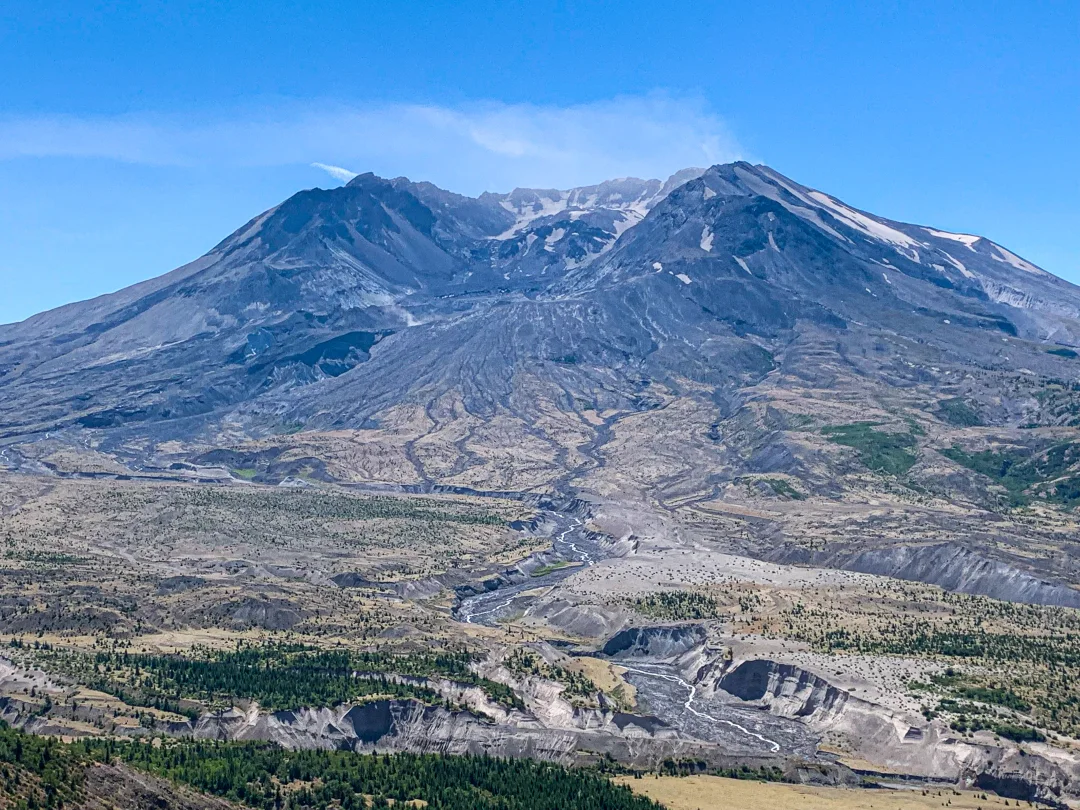
Past, Present & Future of the Mount St. Helens National Volcanic Monument
The Northwest International Film Festival (NIFF) will open its 2026 festival week with a special evening dedicated to one of the Pacific Northwest’s most recognizable and continually changing landscapes: Mount St. Helens.
On Wednesday, September 23, from 5:00 to 7:00 PM, NIFF will present “Past, Present & Future of the Mount St. Helens National Volcanic Monument” at Lower Columbia College, Health & Science Building, Room 101, 1600 Maple Street, Longview, Washington.
The special program brings together short films exploring Mount St. Helens, volcanic landscapes, environmental change, ecological recovery, science, conservation, tourism, education, and the communities that live in the shadow of active volcanoes.
Looking at Mount St. Helens Through Film
More than four decades after the catastrophic eruption of May 18, 1980, Mount St. Helens continues to provide scientists, educators, filmmakers, residents, and visitors with an extraordinary opportunity to observe how a landscape—and the communities surrounding it—respond to dramatic geological change.
The NIFF program will examine that story through three perspectives: past, present, and future.
The past explores the volcano, its eruptions, the people and communities connected to the mountain, and the events that transformed the landscape.
The present considers ecological recovery, ongoing scientific research, conservation, education, recreation, tourism, and the role of the Mount St. Helens National Volcanic Monument today.
The future asks a larger question: What comes next for Mount St. Helens and the region surrounding it?
Local Stories Meet Global Perspectives
The evening will feature films about Mount St. Helens and related topics submitted to the 2026 Northwest International Film Festival. NIFF is also working to supplement these selections with international films that demonstrate how other volcanic and geologically significant regions around the world have approached conservation, education, tourism, cultural heritage, and community development.
Bringing these perspectives together allows audiences to consider Mount St. Helens not simply as the site of a historic eruption, but as part of a much larger international story about how people live with, learn from, protect, and build communities around extraordinary geological landscapes.
The Films Are Only the Beginning
NIFF intends the September 23 program to be more than a film screening.
The films provide a starting point for a community conversation about the social, cultural, and economic future of our region.